This Game is About Robots
What is it?
Who was involved?
Backend Developer
Gameplay Programmer
Zoe Radinski
Level Design
Mathew Vroman
3D Environment Artist
Me
Level Design
This Game is About Robots is a 3D Metroidvania about a robot. Manufactured to transfer energy between objects – you are a walking battery with the ability to power the world around you. After a freak accident, you find yourself in the lower levels of Cog Springs, the only home you’ve ever known.
There, you uncover the truth that the society you once believed was perfect is built upon the shoulders of something much darker. Now you must utilize your energy powers to escape the lower levels, all while dodging the watchful eye of a propaganda-powered dictatorship.
Can I play it?
Not right now. It's planned release is summer of 2026
Engine?
Unreal Engine 5.6
3 Pillars of Level Design
Give Players Space To Move

Give Them Paths of Varying Difficulty
Keep Their Energy From
Reaching 100% or 0%


All unlockable abilities enhance the player's movement, either vertically or horizontally. Each room must be designed to reinforced these abilities to give them more power and impact.
The game emphasizes backtracking; rooms are built with multiple routes with the player's level of skill in mind. One path for the first time through, and another more challenging path for subsequent playthrough.
Player abilities either consume or generate energy, and optimal play keeps their energy from hitting zero or 100; if energy management fails, it should be a result of the player 's actions rather than poor level design.
The Process of Making Rooms
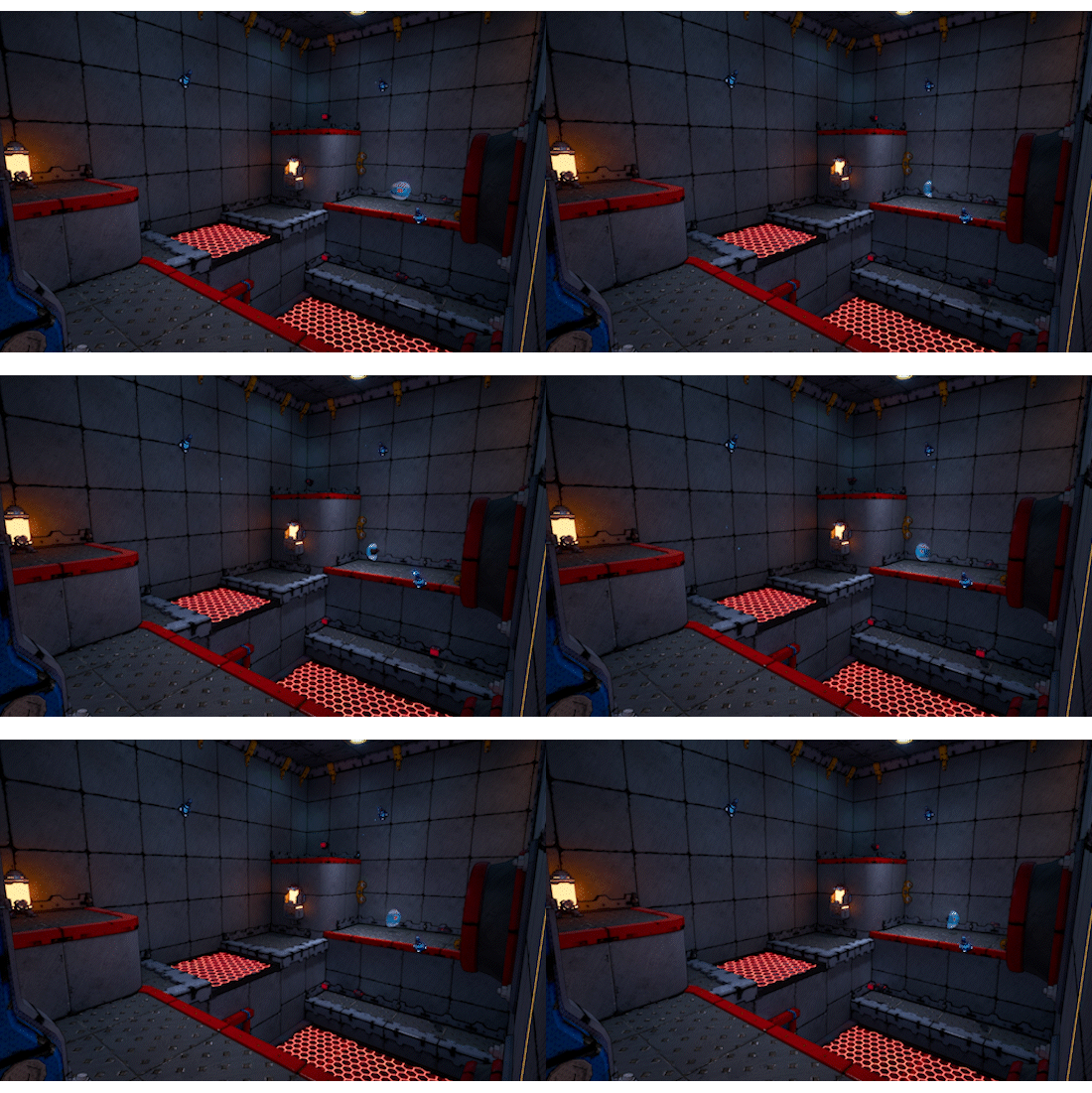
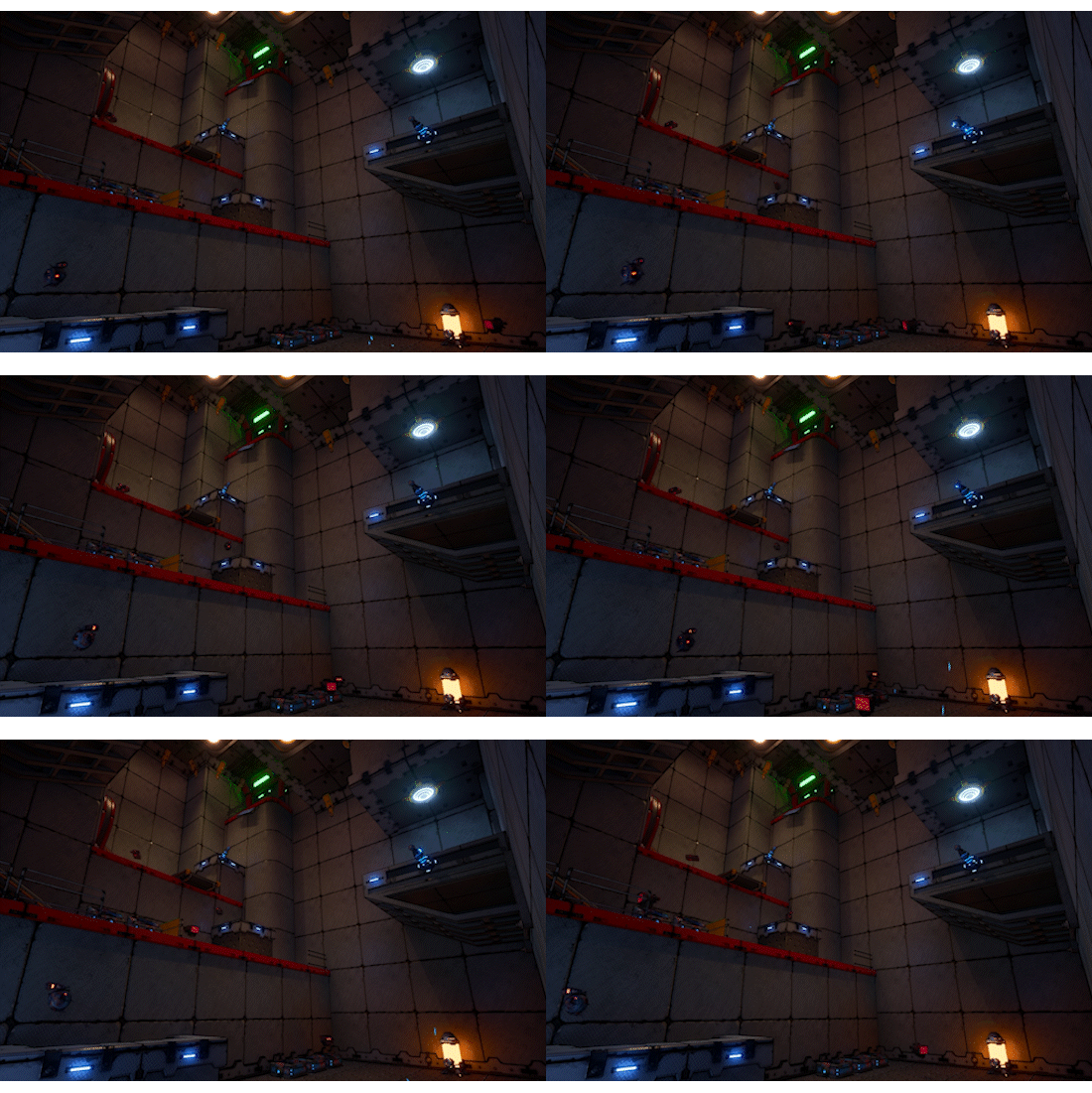
These are the completed rooms after the artist goes in and add all of their assets. This is how the rooms appear in-game.

The process starts with a sketch of the room to get an idea for its identity.


I block out the room and test it until it flows together with the rooms connected to it and creates a cohesive critical path.


Suggestions of where art assets could go are communicated to the artist through simple shapes.
Suggestions of where art assets could go are communicated to the artist through simple shapes.

In this room, the player has to reach the top, so it was crucial that they had a clear line of sight to the exit door.
This room introduces the player to combat so the enemies are spaced in such a way that the player can see them before initiating combat.
Robot Factory
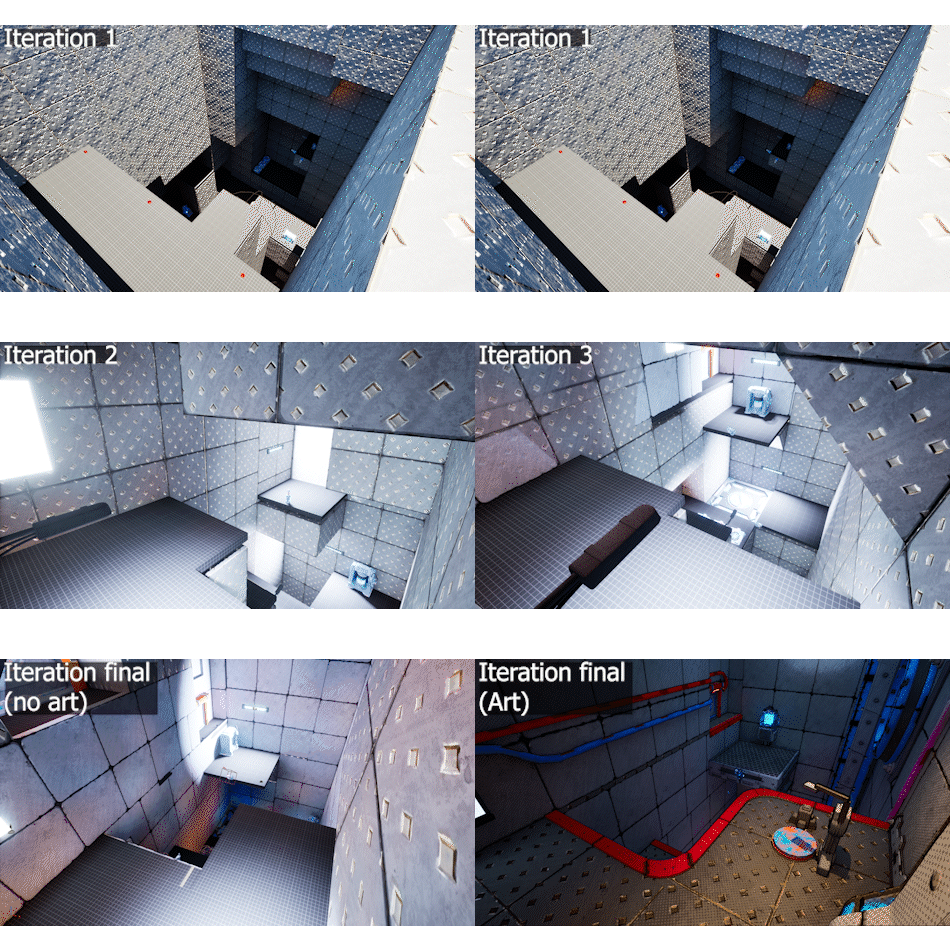
The final level of the vertical slice went through four major iterations, but the most noteworthy was the change from the first one. In order to test out the new approach to TGiAR's level design I made a 'playground disguised as a level' where the player had a many large spaces that they could navigate through with the semblance of a goal. Once the team knew that is the direction we wanted to head, I began work on iteration 2
Room Diagrams


Before All That

Before making any actual level for THiAR I made small playgrounds that tested how some of the mechanics interacted with each other, these are modules. This helped us iterate on the mechanics of the game and see how they interreacted with each other, and decide if the game was entertaining or not.
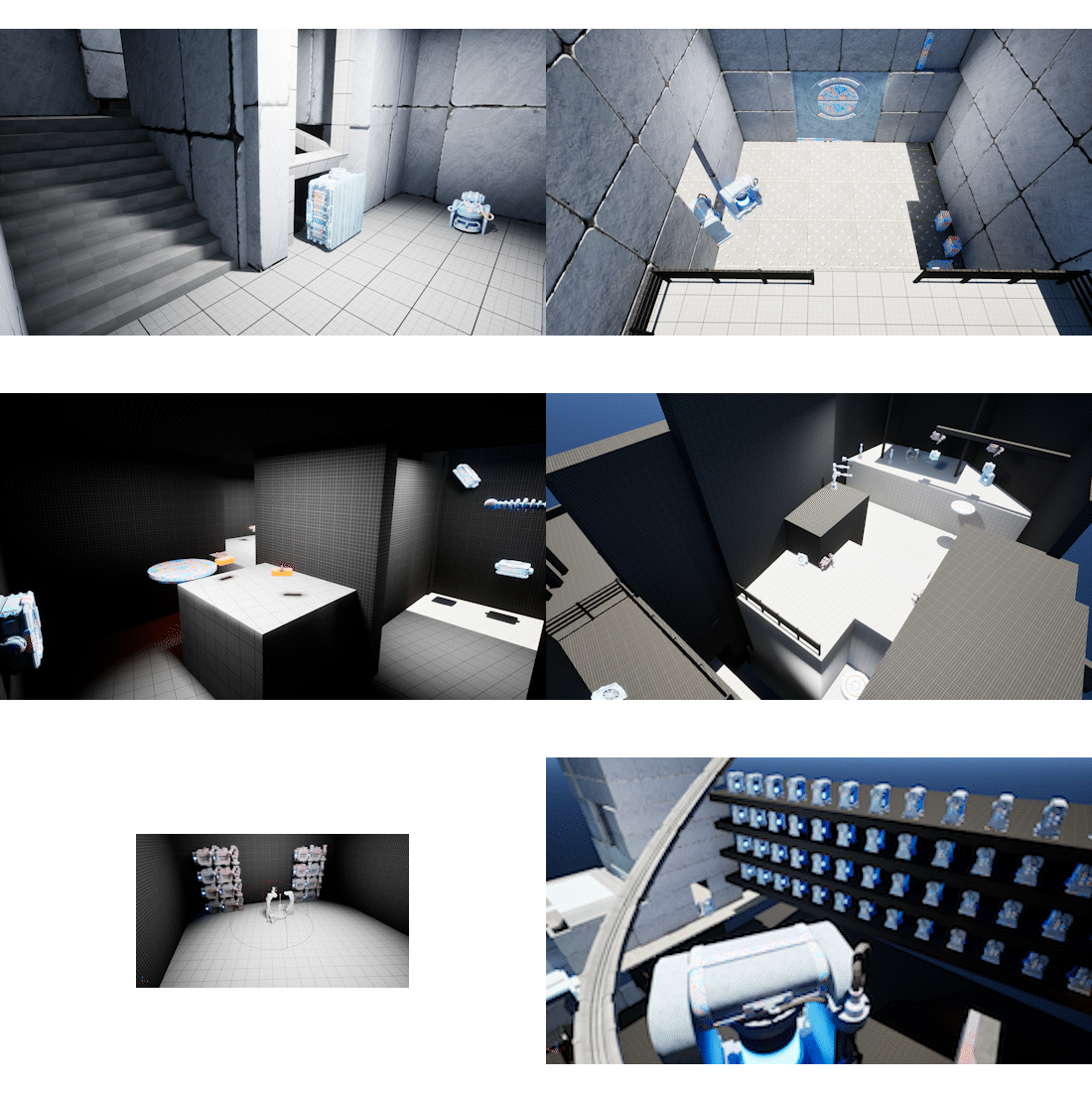
What we learned from these modules was used to make a level, now called the horizontal slice. This version of the level started the player with no upgrades and slowly gain them over the level. Making the vertical slice very slow and gimmicky since every room had to teach the player one mechanic. There was a lot here but it was very shallow hence: Horizontal Slice